
How the New ISA Rules Could Affect Your Savings
Friday 23 January, 2026
Should You Speak to a Financial Adviser About the ISA Changes?
The Autumn Budget 2025 confirmed a number of important changes to Individual Savings Accounts (ISAs), signalling a shift in how tax efficient saving may work in the future.
Although the overall ISA allowance remains unchanged, new rules around how that allowance can be used will begin to influence saving decisions from April 2027.
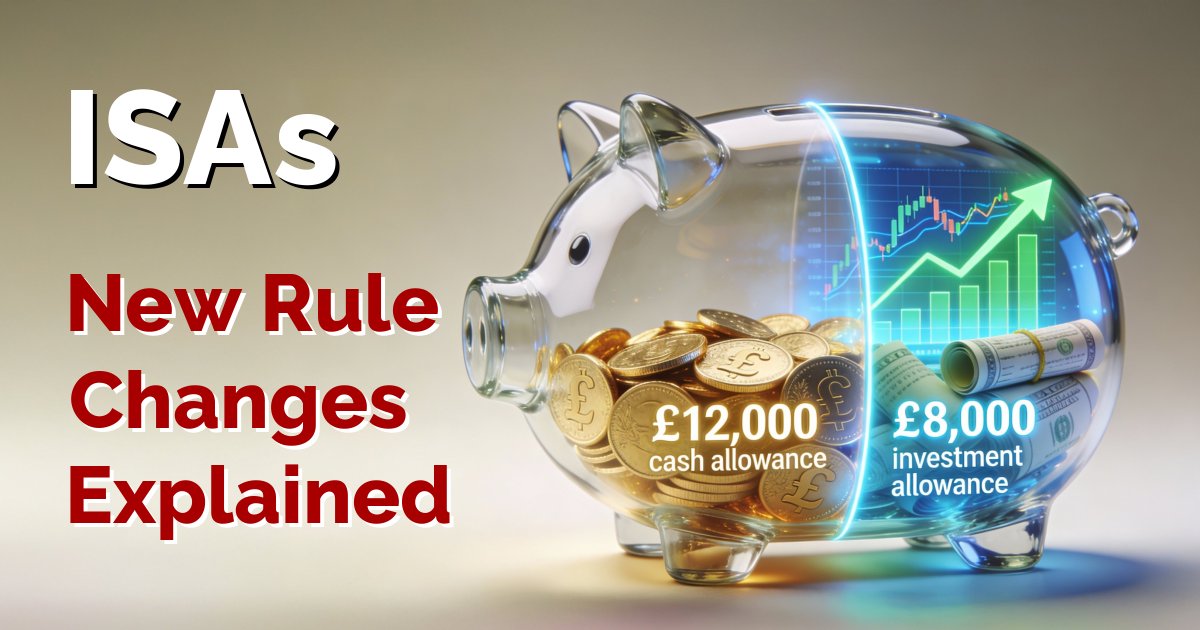
At a headline level, individuals will still be able to save up to £20,000 per tax year within ISAs. However, the balance between cash-based savings and investment focused ISAs will be treated differently depending on age, with particular implications for those under 65.
Mark White, Independent Financial Adviser (IFA) in Chippenham said:
“The ISA changes announced in the Autumn Budget highlight how important it is to look beyond headline allowances and understand how your savings are actually structured.”
Mark continued: “While cash remains an important part of many people’s plans, these reforms reinforce the need to think carefully about balance, time horizon and risk, rather than defaulting to one option. Taking financial advice can help ensure your ISA strategy continues to support your wider financial goals as the rules evolve.”
Cash ISA Contributions: A New Restriction for Under 65s
From April 2027, a new contribution limit will apply to cash ISAs for people below the age of 65. Under the revised framework:
- Savers under 65 will be able to contribute a maximum of £12,000 per tax year into a cash ISA.
This means that cash savings alone will no longer be able to absorb the full ISA allowance for most working age savers. - The remaining portion of the £20,000 annual allowance must be allocated to other ISA types.
Individuals will need to consider alternative ISA wrappers if they wish to use their full tax-free allowance.
This could include:
- Stocks and Shares ISAs, which invest in assets such as equities, bonds and funds and can offer growth potential over the long term.
- Innovative Finance ISAs, which typically involve peer to peer lending or similar arrangements and carry different risk characteristics.
By contrast, individuals aged 65 and over will not be subject to this restriction. They will continue to have the option to place the full £20,000 annual allowance into a cash ISA if they wish.
This age-based distinction reflects the government’s view that older savers are more likely to prioritise capital preservation and predictable income, rather than investment growth.
ISA Allowances That Remain Unchanged
While cash ISA rules are being adjusted, several other ISA limits have been left untouched and confirmed for the medium term. These include:
- Lifetime ISA allowance: £4,000 per tax year.
This allowance remains in place for eligible individuals saving for a first home or later life, subject to existing rules and penalties. - Junior ISA and Child Trust Fund allowance: £9,000 per tax year.
Parents and guardians can continue to save at this level on behalf of children without any reduction in tax efficiency.
These limits are guaranteed until April 2031, providing a level of certainty for families, younger savers and long-term planners.
Read our article: How a Lifetime ISA Works
A Broader Push Towards Investment
The ISA reforms form part of a wider policy objective to encourage greater participation in retail investing. By capping cash ISA contributions for under 65s, the government is gently steering savers towards investment-based ISAs.
Historically, investments held within stocks and shares ISAs have delivered higher returns over the long term than cash savings, although this comes with increased risk and the possibility of losses, particularly over shorter timeframes.
Alongside the ISA changes, the Chancellor also announced an intention to consult on a new, simplified home buying savings product. This could eventually replace the Lifetime ISA (LISA), although no final decisions have yet been made and the details remain subject to consultation.
What These Changes Mean Day to Day
For savers in Chippenham and across the UK, the practical effects of the reforms can be summarised as follows:
- The total ISA allowance remains at £20,000 per year.
Savers can still benefit from the same overall level of tax-free saving as under the current rules. - From April 2027, under 65s will be limited to £12,000 in new cash ISA contributions.
Any desire to save more than this within an ISA will require the use of non-cash products. - Any existing cash ISA balances will not be affected.
Money already held within cash ISAs will continue to benefit from tax free status. - The changes apply only to new contributions made after the rules come into force.
There is no requirement to restructure or move existing ISA holdings as a result of the reforms.
Importantly, the core tax advantages of ISAs remain unchanged. Any interest, dividends or capital gains generated within an ISA will continue to be free from UK income tax and capital gains tax.
Help to Save and Wider Support Measures
Outside of ISAs, the Budget also confirmed the long-term continuation of the Help to Save scheme. This programme is designed to support lower income households in building savings and improving financial resilience.
The government has indicated that eligibility for Help to Save may be expanded in the future, although no fixed timetable has yet been announced and any changes will be subject to consultation.
How Different Savers May Be Affected
The impact of the reforms will vary depending on individual circumstances, objectives and attitude to risk:
- Short term savers who rely on cash ISAs for emergency funds may need to reassess how much of their allowance remains in cash.
Careful consideration will be needed to ensure that access to funds is not compromised. - Long term savers may consider using stocks and shares ISAs for part of their allowance, balancing potential growth against market volatility.
This approach may suit those with longer time horizons who can tolerate short term fluctuations. - Older savers (65+) are largely unaffected, retaining full flexibility to hold up to £20,000 in cash ISAs each year.
For this group, the reforms reinforce the continued role of cash as a low-risk savings option.
As with all financial planning, there is no single solution that suits everyone.
Preparing for the 2027 Changes
Although the new rules do not take effect until April 2027, the lead time offers an opportunity to plan ahead. Sensible steps may include:
- Reviewing how your current ISA allowance is used.
This can help identify whether changes may be needed once the new limits apply. - Considering whether part of your savings could be invested rather than held in cash.
Any such decision should take into account time horizon, risk tolerance and wider financial goals. - Checking individual provider rules, particularly around holding cash within investment ISAs.
Providers may differ in how they structure their products and manage cash holdings.
Further government consultations and provider developments are expected before implementation.
The Importance of Independent Financial Advice
Changes to tax efficient savings can have long term consequences, particularly when they interact with wider financial goals. Our independent financial advisers can help you:
- Understand how the new ISA rules apply to your situation.
This includes clarifying age-based limits and contribution options. - Assess the balance between cash savings and investment risk.
A financial adviser can explain potential outcomes and risks in a clear and regulated manner. - Align your savings strategy with your objectives, whether that is growth, income or capital preservation.
This ensures that ISA decisions support your broader financial plan.
Professional advice can be especially valuable during periods of regulatory change.
Important Information: This article is provided for general information purposes only and does not constitute personal financial advice. Tax rules and legislation can change, and the value of investments can fall as well as rise. Your individual circumstances, tax position and attitude to risk should always be considered. For the most up to date and authoritative information, refer to official government Budget publications and guidance, or speak to a suitably authorised financial adviser. The Financial Conduct Authority does not regulate tax advice.
Latest News Next Article Previous Article