
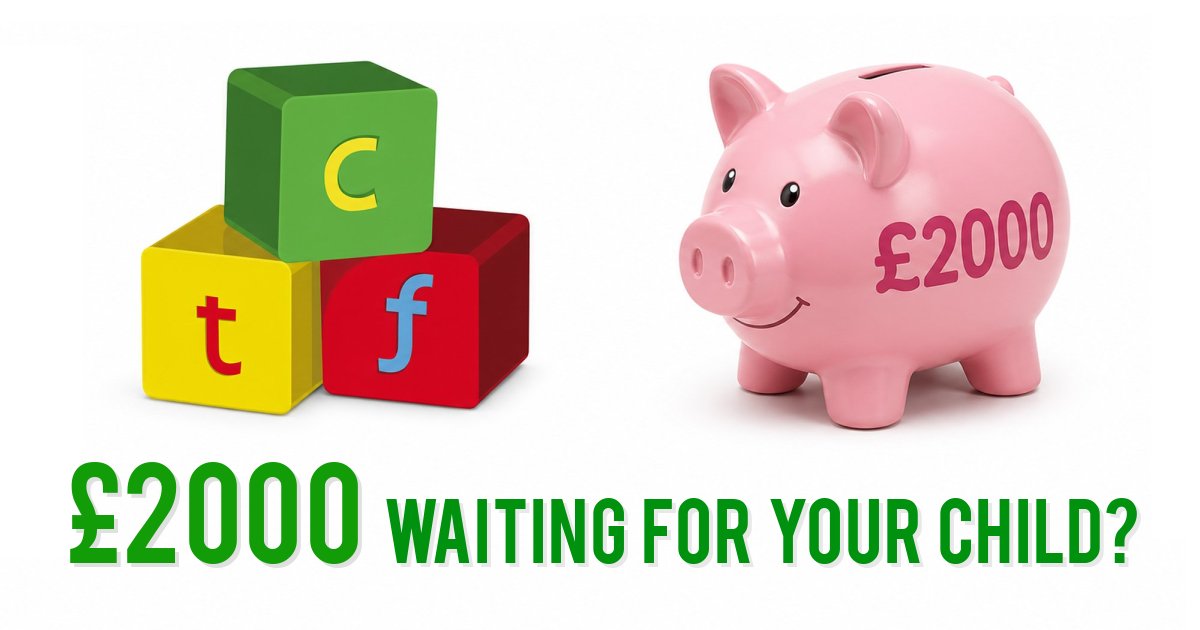
Could your child have a possible £2,000 waiting for them?
Monday 29 June, 2026
It may come as a surprise, but thousands of young people across the UK are sitting on savings they don’t even realise they have.
If your child was born between September 2002 and January 2011, they could have a Child Trust Fund (CTF), and with investment growth over time, many of these accounts could now be worth around £2,000 or more.
With significant sums still unclaimed, it’s well worth checking whether your child could benefit.
What is a Child Trust Fund (CTF)?
A Child Trust Fund is a long-term, tax-free savings account set up by the UK Government for children born between 1 September 2002 and 2 January 2011. HM Revenue and Customs administered the scheme, which aimed to encourage saving and give young people a financial head start.
At the time, the Government provided an initial contribution, typically £250, or £500 for lower-income families, with the option for family and friends to add more over time.
The account belongs to the child and can only be accessed when they turn 18. Until then, it grows tax-free, either as cash savings or investments.
Although the scheme closed in 2011 and was replaced by Junior ISAs, millions of accounts still exist and many have simply been forgotten.
Why are so many CTFs unclaimed?
There are a few simple reasons why these funds often go unnoticed:
- Families may have moved house and lost paperwork
- Parents may not have actively managed the account
- Young people may not realise the account exists when they turn 18
In fact, official estimates suggest hundreds of thousands of accounts remain unclaimed, with billions of pounds sitting untouched.
How to find and claim a Child Trust Fund
The good news is that tracking down a CTF is straightforward and completely free through official Government services.
Step 1: Ask HMRC to locate the account
You can use the official GOV.UK service to request details of the account provider.
You’ll need:
- The child’s full name, address and date of birth
- Your National Insurance number (if you’re the parent/guardian)
- Optionally, the child’s National Insurance number
Visit Find a Child Trust Fund.
Step 2: Wait for confirmation
HMRC will contact you, usually within a few weeks, to confirm where the account is held.
Step 3: Contact the provider
Once you know the provider, parents can access the account (without withdrawing funds), check its value, and decide what to do next.
- At age 16, the child can take over management of the account
- At age 18, they can withdraw or reinvest the money
What could you do with the money?
Receiving a lump sum at 18 can be a fantastic opportunity, but making the right decisions early can make a real difference to long-term financial wellbeing.
Some common options include:
- Moving the funds into an ISA to continue tax-efficient growth
- Opening a LISA to contribute to a first home, with an additional 25% top up from the Government
- Investing for long-term goals such as a house deposit
- Keeping a portion accessible for education or early career costs
For example, using the money as the foundation of a first home deposit and, continuing to invest regularly, could significantly improve future financial security.
How Lonsdale can help
At Lonsdale, we understand that a sudden financial windfall can feel both exciting and possibly a little overwhelming, especially for young adults just starting out.
Our role is to provide clear, tailored investment advice to help make the most of this opportunity.
We can support you with:
- Understanding your options in a straightforward, jargon-free way
- Identifying suitable investments aligned to your goals and risk profile
- Structuring a long-term plan for growth, whether that’s property, retirement, or general wealth building
Conor Muldoon, Financial Adviser in St Albans said:
“Claiming a Child Trust Fund can be a powerful starting point for a young person’s financial future. With the right guidance, even a modest sum can be the foundation for long-term wealth.”
A sensible approach to investing
Investing isn’t about taking unnecessary risks; it’s about making informed decisions over time.
A diversified portfolio, for example, might include:
- Tax-efficient wrappers such as ISAs and LISAs
- Stocks and shares funds for long-term growth
- Bonds for stability
Don’t leave money unclaimed
If your child falls within the eligible age range, it’s well worth taking a few minutes to check. A forgotten account could be a valuable stepping stone towards their future, whether that’s education, a first home, a first car, or long-term financial security.
And when it comes to making financial decisions, our financial advisers are here to help you turn the opportunity into a lasting advantage.
Please note: The value of an investment and the income from it could go down as well as up. The return at the end of the investment period is not guaranteed and you may get back less than you originally invested. The contents of this article are for information purposes only and do not constitute individual advice.
Sources:
Latest News Next Article Previous Article