
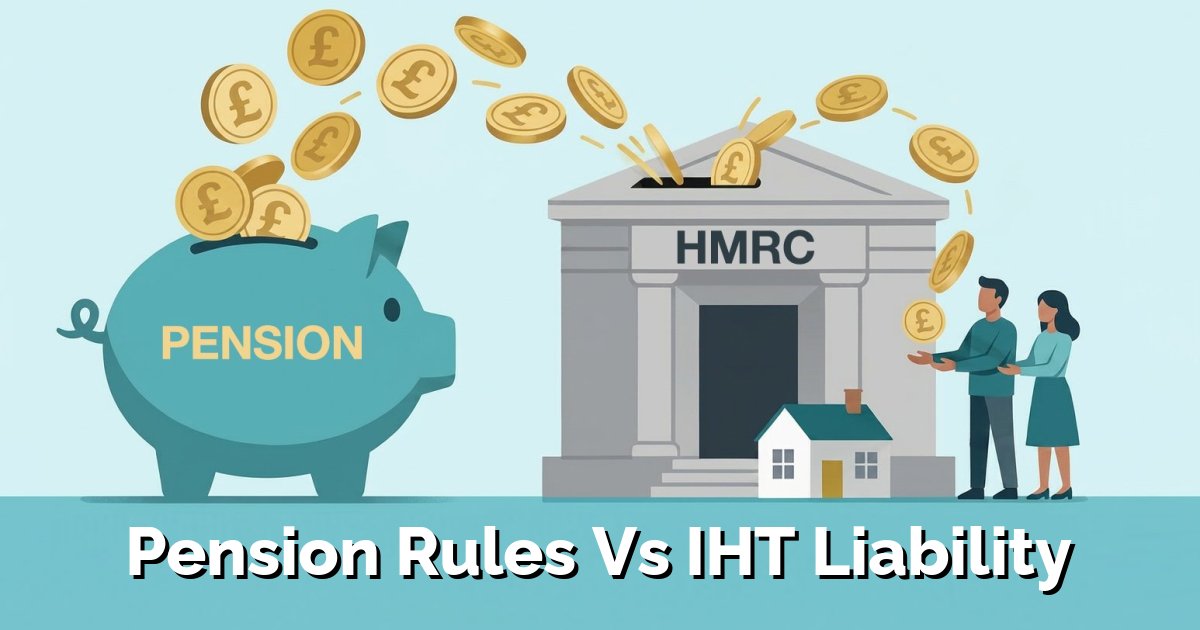
How the 2026 and 2027 pension changes could increase your IHT liability
Wednesday 22 April, 2026
One of the biggest talking points right now, especially between financial advisers and their customers, is the government’s plan to bring unused pension funds on death into the scope of Inheritance Tax (IHT) from 6 April 2027.
With a number of pension and tax changes either already in place or on the horizon, it’s a really good time to take stock of where you stand.
For years, pensions have quietly sat outside of your estate for IHT purposes, often making them one of the most tax-efficient ways to pass on wealth.
That long-standing approach is now shifting, and it’s prompting many people to rethink how their pensions fit into the bigger picture.
Mark Bowen, Independent Financial Adviser in St Albans said:
“Pensions have traditionally been one of the most tax-efficient ways to pass on wealth, but the proposed 2027 changes mean they can no longer be viewed in isolation. It’s now about seeing the full picture and making sure everything works together in the most effective way for you and your family.”
It’s worth noting that, as things stand, these changes are based on government proposals and draft legislation, so the finer details could still evolve. That said, the direction is clear enough that planning ahead now could make a meaningful difference.
What changed in April 2026?
Before looking ahead to 2027, it’s important to understand what has already changed from April 2026, as these updates are now in force and could directly affect your planning.
State Pension increase
The State Pension has increased again under the government’s “triple lock” commitment. For the 2026/27 tax year, this means a higher level of guaranteed income in retirement, which may influence how much you need to draw from your private pensions.
Tax thresholds remain frozen
Income Tax thresholds and the Inheritance Tax nil rate bands remain frozen (currently set until April 2028 with a published government plan to extend that freeze until 5 April 2031). In real terms, this means more people are gradually being pulled into higher tax brackets, a factor to consider when taking pension income.
Ongoing pension allowance framework
Following major changes in April 2024, the pension landscape in 2026 continues under the current framework:
- The Lifetime Allowance (LTA) has been abolished, removing the previous cap on total pension savings.
- Instead, limits now apply to tax-free lump sums, with the Lump Sum Allowance (LSA) and Lump Sum and Death Benefit Allowance (LSDBA) restricting how much can be taken tax-free.
This shift has made pensions more flexible in some ways, particularly for higher earners, but it also means the tax treatment of benefits, both during your lifetime and on death, needs more careful consideration.
Allowances still in focus
The Annual Allowance (currently £60,000, subject to tapering for higher earners) and the Money Purchase Annual Allowance (MPAA) remain key considerations when contributing to pensions.
Taken together, the 2026 position reinforces the idea that pensions are no longer just about saving, they’re about managing when and how you access your money, and how it fits into your wider financial plan.
How pensions are expected to change from April 2027
At the moment, most defined contribution pensions sit outside your estate for IHT.
When you pass away, pension providers or trustees typically decide how benefits are paid, guided by your nomination form.
From 6 April 2027, the government’s proposals suggest a different approach:
- Most unused pension funds and pension death benefits are expected to be included in your estate for IHT purposes.
- Responsibility for reporting and paying any IHT due on these pensions is likely to fall to your personal representatives (your executors or administrators).
The intention behind this shift is fairly straightforward: to encourage pensions to be used for their primary purpose, providing an income in retirement, rather than as a tool for passing on wealth.
That doesn’t mean pensions will automatically be taxed, but it does mean they’ll need to be considered alongside everything else you own.
How pension wealth could increase Inheritance Tax exposure
This is where the change could start to have a real impact.
From 2027, the value of your unused pension could be added to your estate when calculating IHT. For some, that may be the tipping point that pushes the estate above the available thresholds.
As things stand, IHT is generally charged at 40% on the value of an estate above the nil rate band (currently £325,000) and, where applicable, the residence nil rate band (up to £175,000). These thresholds have been confirmed by the government to remain frozen until at least April 2028 with a published government plan to extend that freeze until 5 April 2031.
What this means in practice:
- If your estate is currently below the IHT threshold, adding pension wealth could bring it into scope.
- If your estate is already above the threshold, the inclusion of pensions could increase the overall tax liability.
It’s one of the reasons why pensions are no longer something to look at in isolation, they’re now part of a much bigger financial jigsaw.
The impact on beneficiaries and families
These changes don’t just affect you, they could also change how things work for your family.
Estate administration
If pensions form part of your estate for IHT purposes, your executors will need to include them in calculations and ensure any tax due is paid. That could make the process more complex and potentially slow things down.
Interaction with Income Tax
Even under current rules, inherited pensions can be subject to Income Tax depending on factors like your age when you pass away and how the funds are taken.
The 2027 changes don’t fundamentally rewrite these Income Tax rules, but they do introduce the possibility of both IHT and Income Tax applying in some cases, something that could significantly reduce what beneficiaries ultimately receive.
Why reviewing your pensions is increasingly important
With all of this in mind, a pension review is becoming less of a “nice to have” and more of a key part of financial planning with a qualified financial adviser.
A review can help you:
- Understand how the proposed 2027 changes could affect your estate
- Check your pension still meets your retirement income needs
- See how your pension fits alongside other assets like property, ISAs and investments
Taking action early gives you more options. That might include looking at how and when you draw income, how your assets are structured, and how best to balance tax efficiency with long-term financial security.
Because ultimately, this isn’t just about tax, it’s about making sure your money supports your lifestyle and your family in the way you intend.
Important considerations and limitations
As with any future tax change, there are a few important points to keep in mind:
- The rules are not yet final: The 2027 changes are still going through the legislative process and could be refined.
- Pensions aren’t all the same: Different schemes may be treated differently depending on their structure and benefits.
- Allowances can change: IHT thresholds and reliefs are set by the government and may be updated in future Budgets.
- This is not personal advice: The impact will depend on your individual circumstances, so tailored financial advice is essential.
Pension advice tailored to your individual circumstances
At Lonsdale, we know this can feel like a lot to take in. The rules are evolving, and the stakes are high, but that’s exactly where good advice can make a real difference.
When we review your pensions, our independent financial advisers will:
- Look at your full financial picture, including income needs and long-term goals
- Assess how the proposed 2027 changes could affect your estate
- Help you explore suitable options that balance tax efficiency with your retirement security
If you’re already a Lonsdale customer, we’ll be in touch as part of our ongoing pension and financial planning reviews. If not, and you’re wondering what all of this means for you, now is a sensible time to have that conversation.
Because, with the right inheritance tax planning in place, you can stay in control, both of your retirement and the legacy you leave behind.
Please note: The information contained within this article is based on our understanding of legislation, whether proposed or in force, and market practice at the time of writing. Levels, bases and reliefs from taxation may be subject to change. This is for information only and does not constitute advice. A pension is a long-term investment not normally accessible until age 55 (57 from April 2028 unless the plan has a protected pension age). The value of your investments (and any income from them) can go down as well as up which would have an impact on the level of pension benefits available. The Financial Conduct Authority does not regulate estate planning advice, tax advice or cash flow modelling.
Latest News Next Article Previous Article